
NXP SC26C562C1A: A Comprehensive Technical Overview of the Quad UART with 16-Byte FIFOs
The NXP SC26C562C1A stands as a pivotal component in the realm of serial communication, engineered to provide a robust and high-performance solution for systems requiring multiple asynchronous data channels. This integrated circuit is a quad universal asynchronous receiver/transmitter (UART) that effectively quadruples the serial port capacity of a system, making it indispensable in complex embedded applications such as networking hardware, industrial automation, telecommunications infrastructure, and point-of-sale terminals.
At its core, the device integrates four independent full-duplex UART channels, each capable of operating at a maximum baud rate of 5 Mbps. This high-speed capability ensures that the IC can handle demanding data throughput requirements without becoming a bottleneck in the system. A key feature that significantly enhances its performance is the inclusion of 16-byte transmit and receive FIFOs (First-In, First-Out) per channel. These FIFOs play a critical role in reducing the interrupt loading on the host CPU. By buffering data, the UART can handle bursts of serial data efficiently, allowing the microprocessor to attend to other tasks and only service the UART when a substantial block of data is ready, thereby optimizing overall system performance.
The programmability of the SC26C562C1A is a major strength. Each channel can be individually configured to support a wide range of data formats, including 5, 6, 7, or 8 data bits; 1, 1.5, or 2 stop bits; and even or odd parity generation/checking. This flexibility allows it to interface seamlessly with a vast array of serial devices, from legacy equipment to modern peripherals. Furthermore, the device includes modern conveniences such as auto-flow control via Request-to-Send (RTS) and Clear-to-Send (CTS) signals. This hardware-handshaking capability automatically manages data flow, preventing buffer overrun and underrun conditions, which is essential for maintaining data integrity in high-speed communication links.
The interface to the host system is a parallel 8-bit bus, designed for easy connection to standard microprocessors and microcontrollers. The device is configured and controlled through a set of programmable registers, which are accessible to the host CPU. These registers allow for the setup of baud rates, interrupt masks, FIFO trigger levels, and modem control signals. The interrupt system is highly sophisticated, with the ability to generate a single combined interrupt output for all four channels or to operate in a polled mode. The interrupt status register provides detailed information on the source of each interrupt (e.g., receiver ready, transmitter empty, line status), enabling efficient service routine handling.
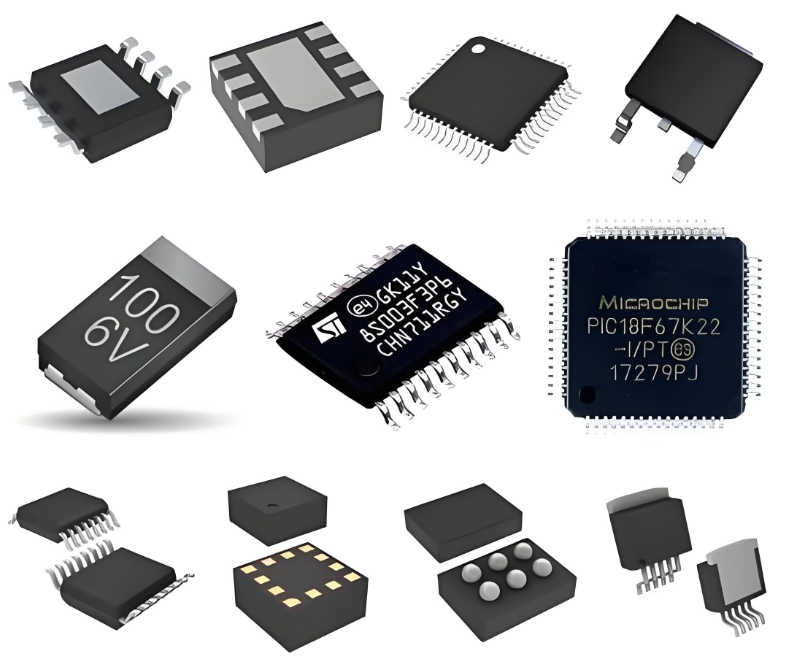
Packaged in a space-efficient 64-pin LQFP, the SC26C562C1A is designed for compact PCB layouts. It operates on a single 3.3V power supply, making it ideal for modern low-power designs, while its I/O pins are 5V tolerant, ensuring compatibility with older legacy systems. Built to meet stringent industrial standards, this UART is a reliable choice for applications that demand long-term stability and performance in challenging environments.
ICGOOODFIND: The NXP SC26C562C1A is a highly integrated and versatile quad UART that excels in offloading the host processor and managing high-speed serial data streams. Its combination of deep FIFOs, flexible programmability, robust flow control, and modern low-voltage operation makes it an exceptional choice for designers seeking to enhance system reliability and efficiency in multi-channel serial communication applications.
Keywords: Quad UART, 16-Byte FIFOs, Auto-Flow Control, 5 Mbps Baud Rate, 3.3V Operation.

